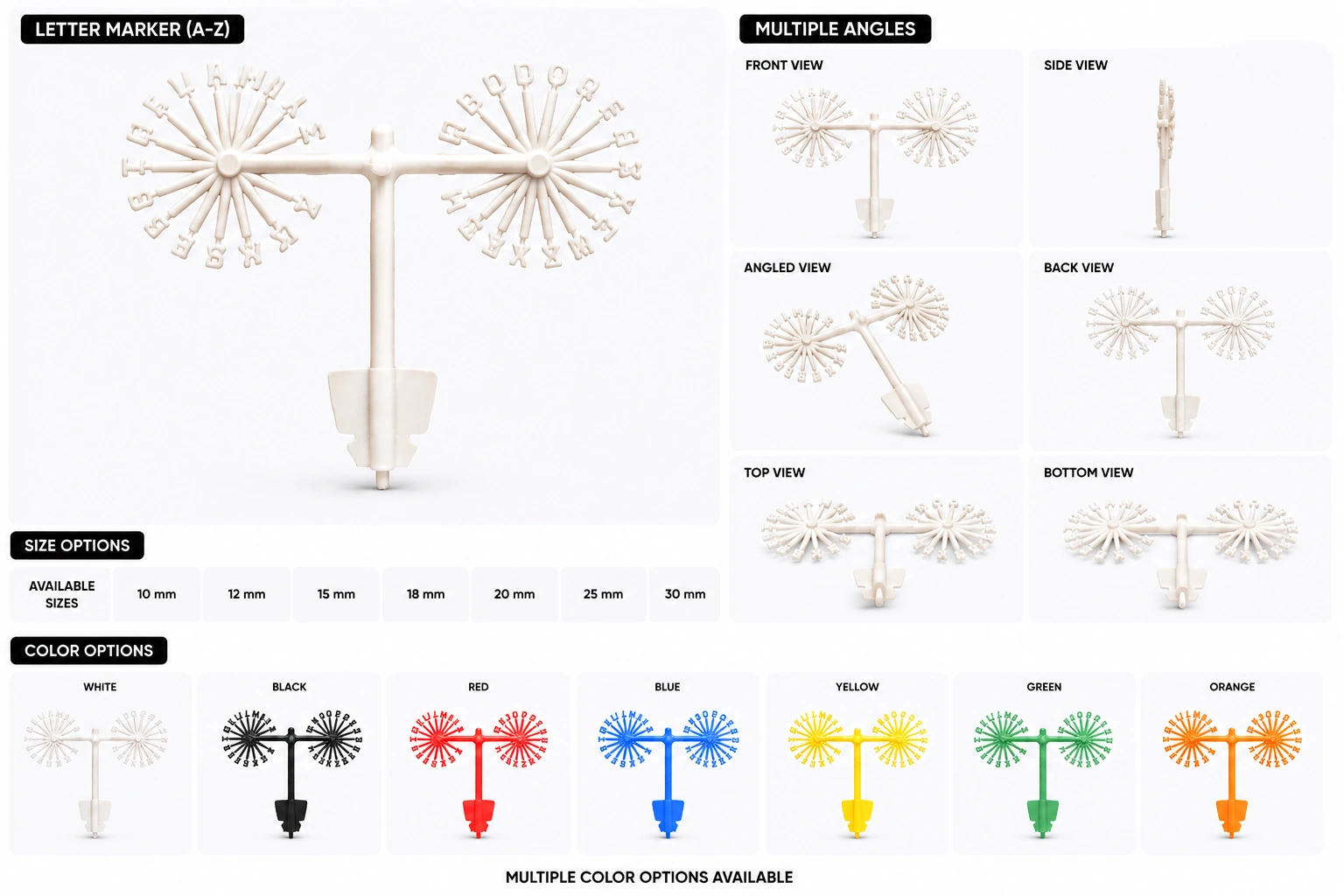
The manufacturing landscape in India has undergone a massive transformation over the past decade, heavily shifting towards precision engineering and high-quality production standards. Among the specialized sectors experiencing significant growth is the production of three-dimensional plastic letters and numbers. These crucial components are the silent ambassadors of brands worldwide, adorning the exteriors of automobiles, gracing corporate headquarters, and providing critical identification on heavy industrial machinery.
As one of the leading plastic letters manufacturers in India, Tech Plastics has been at the forefront of this evolution. We understand that a plastic letter is rarely just a piece of plastic; it is an exact representation of a corporate identity. A minor sink mark, a slight color variation, or a rough edge can instantly cheapen a multi-million dollar brand. This comprehensive guide will walk you through the intricate world of manufacturing plastic letters, from the initial concept phase down to the final quality inspection.
1. Introduction to Plastic Letters and Signage
When you look at the sleek, chrome-plated logo on the back of a luxury car or the bold, vibrant signage above a retail storefront, you are likely looking at precision-moulded plastic letters. Historically, such signage was predominantly manufactured using metals like aluminum, brass, or stainless steel. While metal offers durability, it is exceptionally heavy, prone to corrosion, expensive to machine, and limits design flexibility.
The advent of high-performance engineering thermoplastics fundamentally disrupted this market. Modern polymers can be engineered to exhibit the tensile strength of soft metals, the aesthetic appeal of glass, and weather resistance that outlasts natural materials. Plastic letters manufactured via injection moulding provide a seamless, three-dimensional aesthetic that flat-printed decals simply cannot match. Furthermore, they offer extreme consistency. Whether a brand needs one hundred letters or one hundred thousand, injection moulding guarantees that every single character is completely identical.
2. The Injection Moulding Manufacturing Process
At Tech Plastics, the creation of flawless plastic letters relies on the highly controlled process of plastic injection moulding. This process is vastly superior to other methods like CNC routing or laser cutting acrylic, primarily because injection moulding allows for complex 3D geometries, drafted edges, and integrated mounting features (such as snap-fit pins or countersunk screw holes) right out of the mould.
Concept and Tool Design (DFM)
The journey begins with Design for Manufacturability (DFM). Clients typically provide us with vector files of their specific corporate fonts or logos. Our engineering team translates these 2D designs into 3D CAD models. This is where crucial engineering decisions are made. A plastic letter cannot be a solid chunk of plastic; if it is too thick, the material will shrink unevenly as it cools, creating unsightly depressions on the front surface known as "sink marks." To prevent this, our engineers core out the back of the letter, adding structural ribs that maintain the letter's rigidity while ensuring a perfect, pristine front face.
Mould Machining
Once the CAD design is finalized and simulated using mould-flow analysis software, we move to tooling. High-grade tool steel (such as P20 or H13) is CNC machined and EDM sparked to create the negative cavity of the letters. The surface finish of the mould cavity directly dictates the surface finish of the final plastic letter. If a client desires a high-gloss finish, the mould cavity must be polished to a mirror-like perfection. If they prefer a matte or textured look, the cavity is chemically etched or sandblasted.
The Moulding Cycle
During production, raw thermoplastic pellets are fed into the hopper of our advanced injection moulding machines. The pellets are heated in a specialized barrel until they reach a molten state. A massive hydraulic or electric screw then injects this molten plastic into the steel mould under immense pressure (often exceeding thousands of PSI). The mould is rapidly cooled using internal water channels, solidifying the plastic. The mould opens, and robotic arms extract the perfectly formed plastic letters. This entire cycle can take mere seconds, allowing for highly efficient, high-volume production runs.
3. Specialized Materials for Plastic Letters
Not all plastics are created equal. The choice of polymer is arguably the most critical decision in the manufacturing process, dictated entirely by the end-use environment of the letters.
Acrylonitrile Butadiene Styrene (ABS)
ABS is the workhorse of the plastic letter industry. It offers exceptional impact resistance, dimensional stability, and is highly cost-effective. Crucially, specific grades of ABS are "plating-grade." This means the moulded plastic letters can undergo electroplating, resulting in a genuine metallic finish (such as chrome, gold, or brushed nickel). The vast majority of automotive emblems and high-end indoor corporate signage utilize electroplated ABS.
Acrylonitrile Styrene Acrylate (ASA)
If the plastic letters are destined for the outdoors—exposed to relentless sunlight, heavy rain, and fluctuating temperatures—ABS is not the ideal choice, as it can yellow and become brittle under prolonged UV exposure. Enter ASA. ASA shares the mechanical strength of ABS but boasts vastly superior weatherability and UV resistance. ASA letters will retain their structural integrity and vibrant color for years, even in the harshest outdoor climates, making them the premier choice for exterior architectural signage.
Polycarbonate (PC) and Acrylic (PMMA)
When extreme impact resistance or optical clarity is required, Polycarbonate is utilized. For illuminated signage where light transmission is key, Acrylic (PMMA) or specialized translucent Polycarbonate blends are the materials of choice. These materials allow LED backlighting to shine through evenly, creating stunning halo-lit or face-lit letter effects.
4. Primary Applications and Industries
The versatility of injection-moulded plastic letters means they are deeply integrated into numerous global industries.
- Automotive Industry: From the model nameplate on the trunk of a sedan to the heavy-duty branding on commercial trucks, electroplated ABS letters are standard across the automotive sector.
- Industrial and Heavy Machinery: Construction equipment, factory machinery, and electrical panels require highly durable, chemical-resistant letters (often ASA or PC) for serial numbering and crucial safety warnings. Explore our machine fleet capabilities for heavy-duty moulding.
- Corporate and Retail Signage: Large-scale outdoor brand logos on retail stores, shopping malls, and corporate headquarters rely on UV-stable plastic letters for long-lasting, vibrant brand representation.
- Marine and Aerospace: Specialized polymers are used to create letters that can withstand saltwater corrosion in marine environments or extreme temperature fluctuations in aerospace applications.
5. The Benefits of Choosing Plastic Over Metal
Why are modern industries overwhelmingly shifting towards plastic letters?
1. Cost Efficiency: Machining metal letters via CNC or waterjet is a slow, expensive process that generates significant material waste. Injection moulding, while requiring an initial investment in tooling, results in an incredibly low per-part cost for medium to high volume orders.
2. Weight Reduction: Plastic is a fraction of the weight of metal. This drastically simplifies the mounting process. While heavy metal letters may require heavy-duty bolts and wall anchors, lightweight plastic letters can often be securely mounted using industrial double-sided adhesive tapes (like 3M VHB), preserving the integrity of the mounting surface.
3. Design Freedom: Injection moulding allows for complex curves, intricate serifs, and varying thicknesses that are exceedingly difficult or impossible to achieve with routed metal. Furthermore, plastics can be pre-colored with masterbatch additives to match exact Pantone brand colors, eliminating the need for secondary painting processes.
6. Standard Dimensions & Sizes
We offer a range of standard sizes optimized for legibility and structural integrity. Below are our standard dimensions for letters and numbers:
| Letter / Number Height | Stroke Thickness |
|---|---|
| 4 mm | 1 mm / 1.5 mm |
| 6 mm | 1 mm / 1.5 mm |
| 8 mm | 1 mm / 1.5 mm |
| 10 mm | 1 mm / 1.5 mm |
| 12 mm | 1 mm / 1.5 mm |
| 15 mm | 1 mm / 1.5 mm |
7. Frequently Asked Questions (FAQ)
How do you ensure color consistency across large batches?
At Tech Plastics, we utilize automated gravimetric dosing systems that mix the raw polymer with color masterbatches at highly precise ratios. We also employ strict lot-control and spectrophotometer testing to ensure that the color of a letter produced today matches exactly with one produced a year from now.
Can you manufacture very small or very large letters?
Yes. Our expansive fleet of injection moulding machines ranges from 80 Tons to 250 Tons clamping force. This allows us to mould tiny, intricate letters for consumer electronics as well as massive, thick letters for outdoor architectural signage. You can learn more about our engineering capabilities here.
What mounting options do you provide?
We design the mould to accommodate your specific installation needs. We can mould in blind holes for threaded studs, snap-fit clips for panel mounting, or flat backs designed specifically for the application of industrial adhesive tapes.
8. Conclusion
The manufacturing of plastic letters is a highly specialized discipline that bridges the gap between industrial engineering and commercial art. It requires a profound understanding of polymer science, meticulous tool design, and an unwavering commitment to quality control. As businesses continue to seek durable, cost-effective, and aesthetically flawless ways to showcase their brand identity, the demand for precision injection-moulded letters will only continue to rise.
If you are looking for a reliable, high-quality plastic letters manufacturer in India, Tech Plastics has the experience, the technology, and the dedication to bring your brand to life. Contact our engineering team today to discuss your custom signage and branding requirements.